

Products
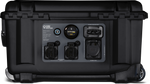 Batt Pack Energy | Portable 3kW Solar/Vehicle Generator Power Pack
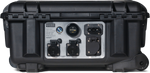 Batt Pack Pro | 5kW
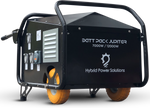 Batt Pack Jupiter | 7kW
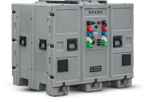 Spark Cube | 12kW/24kW
 TERRA | 166kVA
Resources

Lithium Battery Generator: The Future of Portable Power
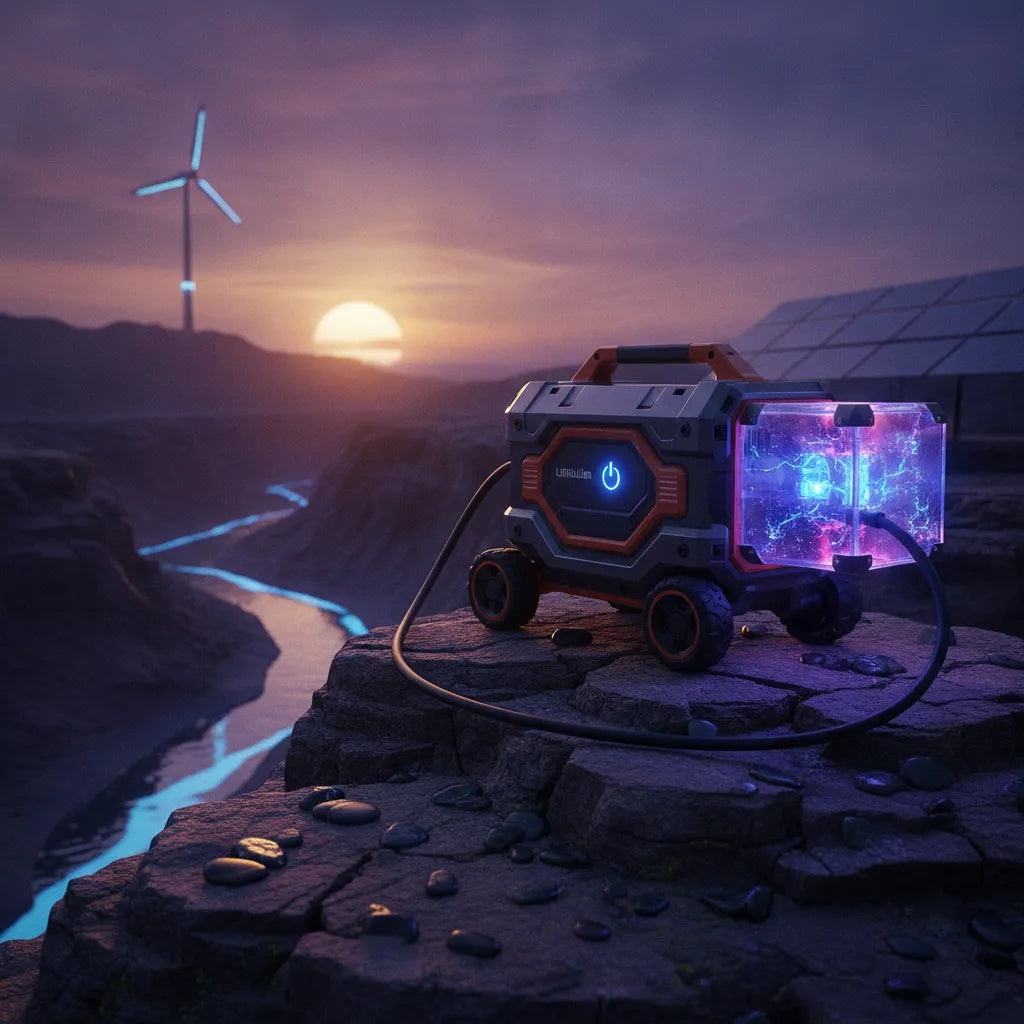
A lithium battery generator, more accurately called a lithium battery power station, stores electrical energy in lithium cells (typically LFP) and delivers it through AC and DC outlets without fuel, fumes, or engine noise. Unlike gas generators, they charge from wall outlets, solar panels, or vehicles, and can power most household appliances and job-site tools for hours. Capacity ranges from 300Wh for camping loads to 3,500Wh+ for whole-home backup.
What Is a Lithium Battery Generator and How Does It Work?
"Lithium battery generator" is a consumer search term for a battery power station, a rechargeable device with no combustion engine, no fuel, and no exhaust.
Manufacturers use names like "portable power station" or "battery power station," but the underlying product is the same: a large lithium cell pack paired with power electronics that accept electricity from multiple sources and deliver it through standard outlets. The term generator is a misnomer, but it has stuck because these units replace gas generators for many common tasks.
"Lithium iron phosphate battery technology represents a significant leap forward in energy storage safety and longevity. The chemistry's inherent thermal stability makes it far better suited for demanding applications than earlier lithium formulations." — Dr. Yet-Ming Chiang, Professor of Materials Science, Massachusetts Institute of Technology
What Are the Main Components of a Lithium Battery Power Station?
Four components define how a lithium battery power station stores and delivers power:
- Lithium cell pack (LFP or NMC): The core storage unit, lithium iron phosphate (LFP) or nickel manganese cobalt (NMC) cells that hold the electrical energy.
- Battery management system (BMS): The electronic brain that monitors cell voltage, temperature, and current to prevent overcharge, over-discharge, and thermal runaway.
- Inverter: Converts the battery's DC output to 120V AC so standard appliances and tools can plug in, inverter wattage rating (commonly 1,800W continuous) sets the ceiling on what loads you can run simultaneously.
- Charge controller: Regulates incoming power from solar panels (using MPPT logic), wall outlets, or vehicle ports to protect the cells during charging.
According to the U.S. Department of Energy's Battery Storage Technology overview, LFP chemistry has become the dominant choice in quality units because it tolerates 2,000–3,500 charge cycles before significant capacity loss, compared to roughly 500 cycles for NMC, and it is far more thermally stable — a meaningful safety advantage in hot or confined environments [3].
Output ports on a typical unit include 120V AC outlets, USB-A, USB-C at up to 140W Power Delivery, and 12V DC, covering everything from laptops and power tools to CPAP machines and refrigerators, within the inverter's wattage limit.
How Do Lithium Battery Generators Compare to Traditional Portable Power Solutions?
The key operational difference is energy source: a gas generator produces electricity on demand through combustion; a lithium battery power station stores electricity and dispatches it. That distinction drives every practical trade-off.
Charging flexibility is where modern units separate themselves. Quality systems accept AC wall power, solar via MPPT controller, 12V car or truck ports, and DC-to-DC fast charging, and the best units accept multiple inputs simultaneously, cutting recharge time significantly. Hybrid systems, for example, are designed to accept solar, alternator, grid, and generator inputs in parallel, which matters on remote job sites where no single source is guaranteed.
Gas generators produce more continuous wattage per dollar at high loads, but they require fuel logistics, produce carbon monoxide, and cannot operate indoors. A portable battery power station trades raw wattage ceiling for silence, zero emissions, and multi-source recharging — the right trade-off for most regulated job sites, indoor events, and off-grid deployments where fuel supply is unreliable.
Lithium Battery Generator vs. Gas Generator: Key Differences and Real Costs
These battery-powered units cost more upfront but consistently undercut gas generators on total cost over a 3–5 year horizon when fuel and maintenance are factored in.
"When you factor in fuel costs, maintenance, and the hidden costs of downtime, battery-based power systems often reach cost parity with gas generators within two to three years of deployment." — Janice Lin, Founder and CEO, Green Hydrogen Coalition
What Are the Cost-Benefit Differences Between Lithium and Gas Generators Over Time?
A 1,000Wh lithium battery generator typically sells for $700–$1,200, compared to $400–$800 for a comparable gas unit. That gap closes fast. Gas generators add $150–$300 per year in fuel, oil changes, and spark plug replacements, costs that compound every season.
Run the numbers over five years: a gas generator purchased at $600 can accumulate $750–$1,500 in operating costs, pushing its total ownership cost past $2,000. A quality LFP (lithium iron phosphate) unit rated for 3,000 charge cycles, used 2–4 times per week, stays well below that threshold when charged from grid or solar, with near-zero variable costs.
Noise and emissions widen the gap further on regulated job sites. A lithium unit operates at 0 dB with zero exhaust. Gas generators produce carbon monoxide, a genuine poisoning risk in enclosed spaces, and routinely exceed noise bylaws on urban construction sites. Sites facing bylaw violations or CO liability can't treat that as a soft cost.
For a wide selection of portable battery power options, Goal Zero's Yeti line of portable power stations offers a range of LFP and NMC units suited to different load requirements.
How Do Maintenance Requirements and Runtime Differ Between Lithium and Traditional Generators?
Lithium battery generators require zero scheduled maintenance, no oil, no carburetor cleaning, no fuel stabilizer for off-season storage. Gas generators need service every 50–100 hours of use, which adds up quickly on active job sites.
Runtime works differently across both types. A 1,000Wh lithium unit powering a 100W load delivers roughly 8–9 hours of runtime after accounting for inverter efficiency losses of 10–15%. Gas generators can run indefinitely with fuel, but require refueling every 8–12 hours and can't be stored indoors safely between uses.
For operations running predictable daily loads, remote monitoring equipment, lighting, or tool charging, the lithium model fits cleanly. For extended multi-day runs with no recharge access, gas still has the edge on raw endurance. Hybrid systems address that gap directly: their configurations accept solar, grid, alternator, and generator inputs, so operators can top up a lithium battery system in the field without depending on a single source.
How to Choose the Right Lithium Battery Generator Capacity for Your Needs
Add up your devices' running watts, multiply by runtime hours, then divide by 0.85 to get your minimum watt-hour requirement.
That 0.85 divisor accounts for inverter efficiency losses, energy that converts from DC battery storage to AC output isn't free. A site running 300W of LED work lights and a CPAP machine (60W) for 8 hours needs at least 3,294Wh before you even factor in surge loads.
How Much Power Do Common Household Appliances Require from a Lithium Generator?
Matching a battery power station to your actual load starts with real wattage numbers, not estimates. A mini fridge draws 40–60W continuously; a CPAP machine runs 30–60W; LED work lights pull 20–50W each; a power drill peaks at 400–600W; and a 15,000 BTU AC unit demands 1,200–1,500W running. Those figures alone determine whether a 500Wh or 2,000Wh unit is appropriate for your site.
Inverter ratings split into two numbers that both matter. A unit rated 1,000W continuous but 2,000W peak can start a fridge compressor, which surges 3–5x its running watts at startup, without tripping. Always check both figures before purchasing.
Hybridps's Batt Pack Pro is engineered for exactly these field conditions: multi-input charging (solar, alternator, grid, or generator), Canadian engineering, and verified operation down to -30°C. That cold-weather performance is a hard requirement on northern construction and mining sites where consumer-grade units lose significant capacity in sub-zero temperatures.
What Warranty Coverage and Battery Degradation Rates Should You Expect Across Different Brands?
Consumer-focused brands typically offer 2–5 year warranties and rate LFP cells to 80% capacity retention after 3,000 cycles [3]. Budget units often cap at 500 cycles with 1-year coverage, a meaningful difference when calculating total cost of ownership over a 5-year deployment.
According to the National Renewable Energy Laboratory's research on battery degradation, cycle life and operating temperature are the two most significant factors in long-term capacity retention for lithium-based storage systems. For industrial and remote-site operators, warranty terms matter less than cycle life and cold-weather performance data. Confirm that any unit you evaluate publishes tested capacity retention at the temperatures your site actually reaches.
How Many Lithium Batteries Do You Need to Power a House?
Whole-home backup requires 10–15 kWh minimum for essential circuits only — a single 3,500Wh unit covers roughly 10% of a typical daily load.
The average Canadian or US household consumes 30–35 kWh per day. A single portable battery power station in the 3,000–3,500Wh range handles a fraction of that. To run a full home, you either need significant stacked capacity or a disciplined load-shedding plan that limits power to critical circuits only.
Can a Battery-Powered Generator Run a House as a Primary Power Source?
For most households, whole-home primary power from batteries alone is not practical without a large solar array and significant storage capacity. But an essential-only strategy is achievable. Powering a refrigerator, LED lighting, phone charging, and a CPAP machine draws roughly 1,500–2,500Wh per day, well within the range of a single expandable 3,500Wh unit paired with solar recharge.
The math is straightforward: a 400W solar panel array in a region with 5 peak sun hours generates approximately 2,000Wh per day. That output nearly offsets the essential load entirely, making indefinite runtime realistic during daylight-heavy seasons.
For larger capacity needs, expandable systems can stack external battery modules to reach 10–21 kWh of total storage [3]. Fixed home battery installations, such as the Tesla Powerwall at 13.5 kWh and approximately $11,500 installed, offer a permanent alternative, but without the portability or multi-input flexibility that field-deployable systems provide.
How Do You Integrate a Lithium Battery System with Your Home Electrical System for Backup Power?
Connecting a portable lithium battery system to your home circuits requires a transfer switch or interlock kit — this is not a plug-and-play installation. A licensed electrician must wire the transfer switch to your electrical panel to prevent back-feeding the grid, which is both a code violation and a safety hazard for utility workers.
Competitors often gloss over this step, presenting battery systems as ready to run a home out of the box. They are not. Budget for professional installation when planning whole-home or critical-circuit backup, and confirm your unit's AC output matches the loads you intend to run before purchasing.
The 80/20 Rule for Lithium Batteries and What Independent Testing Reveals About Real-World Performance
Keeping a lithium battery between 20% and 80% state of charge can extend usable cycle life by 30–50% compared to regular full charge/discharge cycles.
Most quality battery management systems include a "storage mode" or charge-limit setting that enforces this range automatically. Skipping it doesn't break the battery immediately — it just accelerates cell degradation over hundreds of cycles, quietly shrinking the capacity you paid for.
How Do Real-World Efficiency Ratings Compare to Advertised Output Specifications?
Independent testing by outlets including Wirecutter and Popular Mechanics consistently finds that lithium power stations deliver 85–92% of their rated Wh capacity under real loads. A 1,000Wh unit realistically delivers 850–920Wh before the low-battery cutoff triggers — meaning a spec sheet is always optimistic by at least 8%.
Two efficiency figures deserve scrutiny before you buy. First, inverter efficiency: look for 90% or higher. Second, charge efficiency: LFP cells charge at roughly 95% efficiency versus approximately 85% for NMC chemistry. LFP also self-discharges at just 2–3% per month in storage, compared to around 5% for NMC — a meaningful difference on a remote site where equipment sits idle between rotations.
Temperature compounds the gap further. At -10°C, LFP cells can lose 20–30% of rated capacity. At -20°C, some budget units shut down entirely. Hybridps systems are rated and field-tested to -30°C — a concrete, verifiable differentiator against consumer-grade units rated only to 0°C discharge.
What Independent Performance Testing Shows About Lithium Generator Reliability
Consumer-focused reviews rarely test sustained high-load performance over four or more hours, and almost none include cold-weather capacity measurements. That gap matters for construction, mining, and defense operators who run continuous loads in sub-zero conditions — exactly the scenario where a lab-rated spec diverges most sharply from field reality.
Professional buyers should request cold-temperature discharge curves and sustained-load efficiency data, not just peak Wh ratings. Hybridps publishes field-tested performance data for extreme environments precisely because standard spec sheets don't tell the full story for mission-critical deployments.
"Real-world battery performance in cold climates can deviate dramatically from manufacturer specifications. Operators in northern regions should always demand temperature-specific discharge data before committing to any energy storage solution." — Dr. Linda Nazar, Professor of Chemistry, University of Waterloo and Fellow of the Royal Society of Canada
Frequently Asked Questions
Can a lithium battery generator power a refrigerator?
Yes, a lithium battery generator can power a refrigerator, provided its continuous output rating exceeds the fridge's running wattage, typically 100–400W depending on the model. A standard 1,000Wh unit running a 150W refrigerator will last roughly 5–6 hours before recharging. For extended runtime, pair the battery system with a solar input or a secondary charging source to maintain continuous operation without interruption.
How long does a lithium battery generator last before it needs replacing?
Most lithium battery generators retain usable capacity for 2,000–3,500 charge cycles before dropping below 80% of their original capacity. In daily use, that translates to 5–10 years of service life. LiFePO4 (LFP) chemistry typically reaches the higher end of that range. Industrial-grade systems engineered for harsh environments, such as those rated to -30°C, often maintain capacity longer because their battery management systems prevent thermal and charge stress.
Is a lithium battery generator safe to use indoors?
Yes, lithium battery generators produce no combustion emissions, making them safe for indoor use where diesel or gas generators are prohibited. They generate no carbon monoxide and operate silently. Standard precautions still apply: keep units away from flammable materials, ensure adequate ventilation if the system runs warm under heavy load, and follow the manufacturer's temperature and storage guidelines.
Can you charge a lithium battery generator while using it?
Yes, most lithium battery generators support simultaneous charging and discharging, a feature sometimes called pass-through charging. You can draw power from the unit while it charges via solar, grid, or a generator input. Check the manufacturer's specifications, as some units restrict pass-through at high load levels to protect the battery management system from thermal stress.
What is the difference between LFP and NMC lithium battery generators?
LFP (lithium iron phosphate) and NMC (lithium nickel manganese cobalt oxide) are the two dominant chemistries in lithium battery generators [3]. LFP offers a longer cycle life (3,000+ cycles), better thermal stability, and safer operation at temperature extremes, making it the preferred choice for industrial and off-grid deployments. NMC delivers higher energy density in a smaller, lighter package, which suits portable consumer applications where weight matters more than longevity.
Conclusion
A this approach is not a single product — it's a technology category that spans consumer power stations and industrial-grade systems engineered for mission-critical sites. The chemistry you choose (LFP for longevity and safety, NMC for compact weight) shapes total cost of ownership as much as the upfront price does. And for sites operating in extreme cold, temperature rating is not a footnote — it determines whether your power source actually works when you need it.
If your operation runs in remote or regulated environments, review your current fuel and maintenance spend against the 40–60% TCO reduction that a hybrid battery system can deliver. Then request a site-specific configuration from Hybridps at hybridps.ca, bring your load requirements, runtime targets, and temperature range, and get a system sized for your actual conditions.